
Every Indian D2C brand starts with one courier. It is the right start: one integration, one rate card, one relationship, one set of quirks to learn. The problem is that the brand grows and the courier does not grow with it. Lanes that delivered in two days start taking four. Weight discrepancies multiply on the invoice. A festive spike arrives and your allotment — the daily volume the network will actually carry for you — caps out two weeks into the sale. None of this means the courier got worse. It means the single-courier model has a capacity, and you found it.
Choosing the first courier is a selection question. This piece is about the stage after: how to run several couriers at once, who carries what, and how to know when the second (and third) partner pays for itself.
The four signals
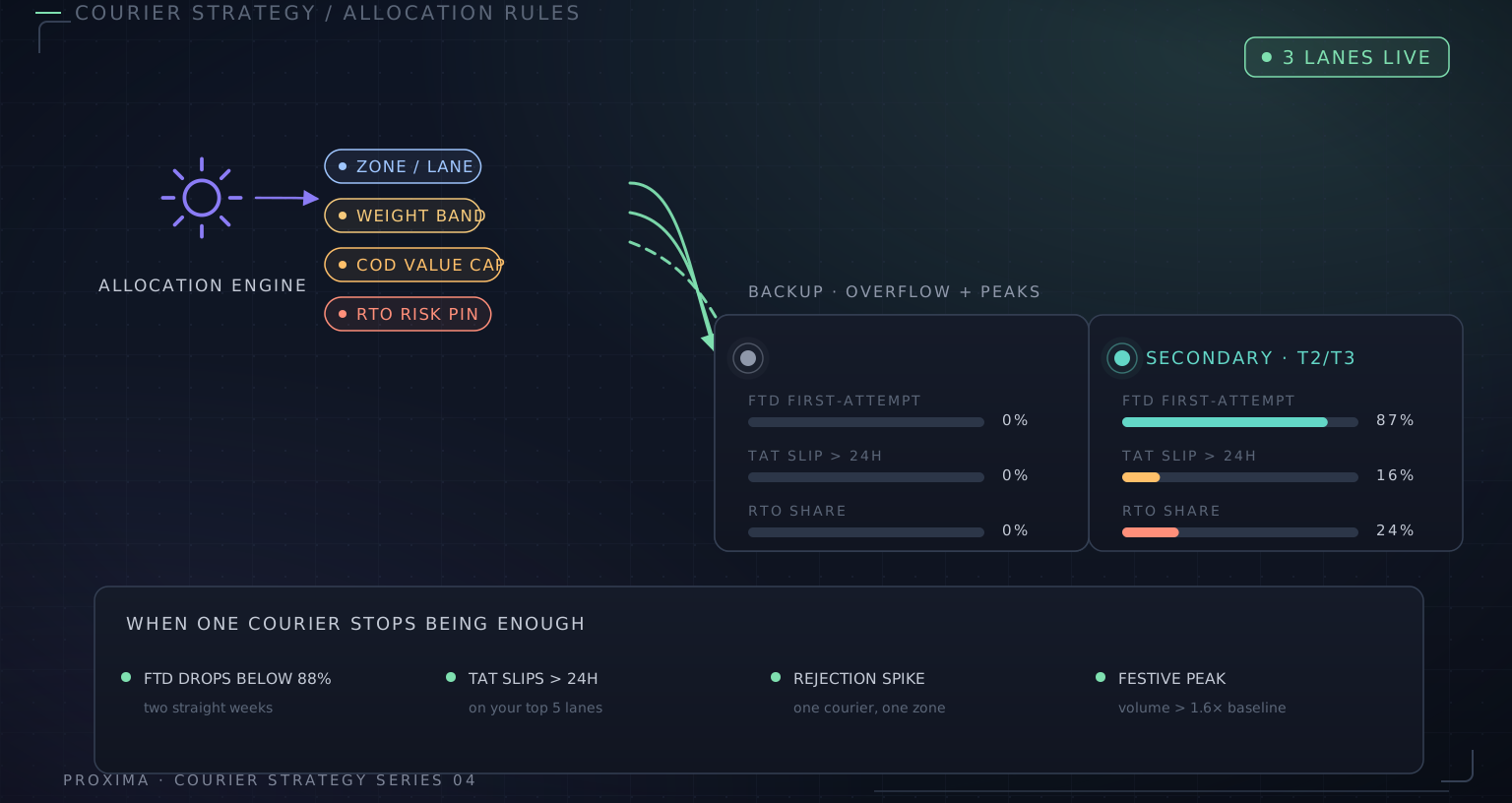
Four patterns, seen in your own data, say the single-courier era is ending:
- First-attempt delivery sliding under ~88% for two straight weeks. One bad week is weather or a strike. Two is capacity.
- TAT slipping more than 24 hours on your top lanes. Especially when the slip is on lanes that used to be the courier’s best.
- Rejections clustering in one zone. A pin-code belt where performance collapsed while the rest of the network held — a hub problem you are paying for in NDRs.
- Festive volume above roughly 1.6× baseline. Sale-season allotments run out for everyone; the brands who planned a second lane in September ship through October while others queue.

Any one signal is a conversation with your account manager. Two at once is a procurement project. The brands that suffer most are the ones that treat all four as account-manager conversations for two quarters.
What the routing table looks like
Allocation is a set of rules that decides, per order, which lane carries it. The inputs that earn their place in the table:
- Zone and lane history. Your delivered-on-time and NDR rates by pin, per courier. This is the core — courier A wins metro-plus-T1, courier B wins the T2/T3 belt, and the table says so because the scans say so, not because of a slideware claim.
- Weight band. Couriers price and perform differently above 5kg and above 10kg. Bulky orders on the lane that handles them physically, not the one that is cheapest on paper at 500 grams.
- COD value cap. High-value COD is your biggest exposure — a ₹18,000 smartphone refused at the door on the weakest lane is a bad day. Route COD above a threshold to the lane with the best collection-and-return behavior in that zone, or make it prepaid-only.
- RTO-risk pins. Where confirmation data shows low confirmation and high refusal, the routing table can demand the strongest lane — or hold the order for review before any courier touches it.
- Serviceability truth. The weekly per-pin table from the address quality stack: who can actually deliver, forward and reverse, at this pin this week.
Run it as primary / secondary / backup per lane, not per brand. The primary carries the volume and earns it monthly; the secondary carries the overflow and the pins where primary is weak; the backup exists for festive peaks and outages. Every lane has all three, because every lane eventually needs them.
The scorecard that keeps everyone honest
Three numbers per courier per month, by zone: first-attempt delivery percentage, TAT slip beyond 24 hours, and RTO share on what they carried. Weight discrepancies from the invoice belong on the same wall — a courier with clean delivery and chronic billing inflation is more expensive than it looks, and weight reconciliation is how you catch it. Review the table monthly and re-route on evidence. The credible threat that volume moves is worth more than any negotiation call.
What a second courier actually costs
The honest ledger has more rows than the rate card. Integration effort, now near-zero with standard aggregators and OMS plugins. Reconciliation overhead — two invoices, two sets of quirks, twice the audit work. NDR processes that must work per carrier, since each has its own codes and pages. Against that: the NDRs that stop happening, the TAT recovered, the allotment insurance for festive season, and the pricing discovery of watching two rate cards side by side. For most brands past a few thousand orders a day, the second column wins within a quarter — usually visibly in the first festive season.
Sequencing matters: add the second courier on your top five lanes first, where the data is richest and the stakes highest. Let it prove itself for sixty days, then widen. The third courier is a festive-and-backup decision, rarely a daily-routing one.
Where automation fits
The routing table itself is rules — an engine that reads the order and the weekly scorecards and stamps a lane before the pick list prints. The monitoring is rules: the four signals above, computed weekly, flagged before they become quarter-end surprises. What stays with people: the rate negotiation, the decision to demote a primary, the COD value caps, and the read on when a courier’s bad month is a strike versus a structural slide. Machines carry the table; operators move the rows.
One caution from experience: do not let the routing table silently become a black box either. Every allocation decision should be inspectable — why this order went to that lane — because the day a big client’s parcels all went to the weak lane, you will want the one-line answer, not a shrug.
The quiet upside
Brands that run honest scorecards and a real routing table stop having courier conversations that start with blame. The conversation starts with a number and ends with a routing change. That is a better use of everyone’s October.