
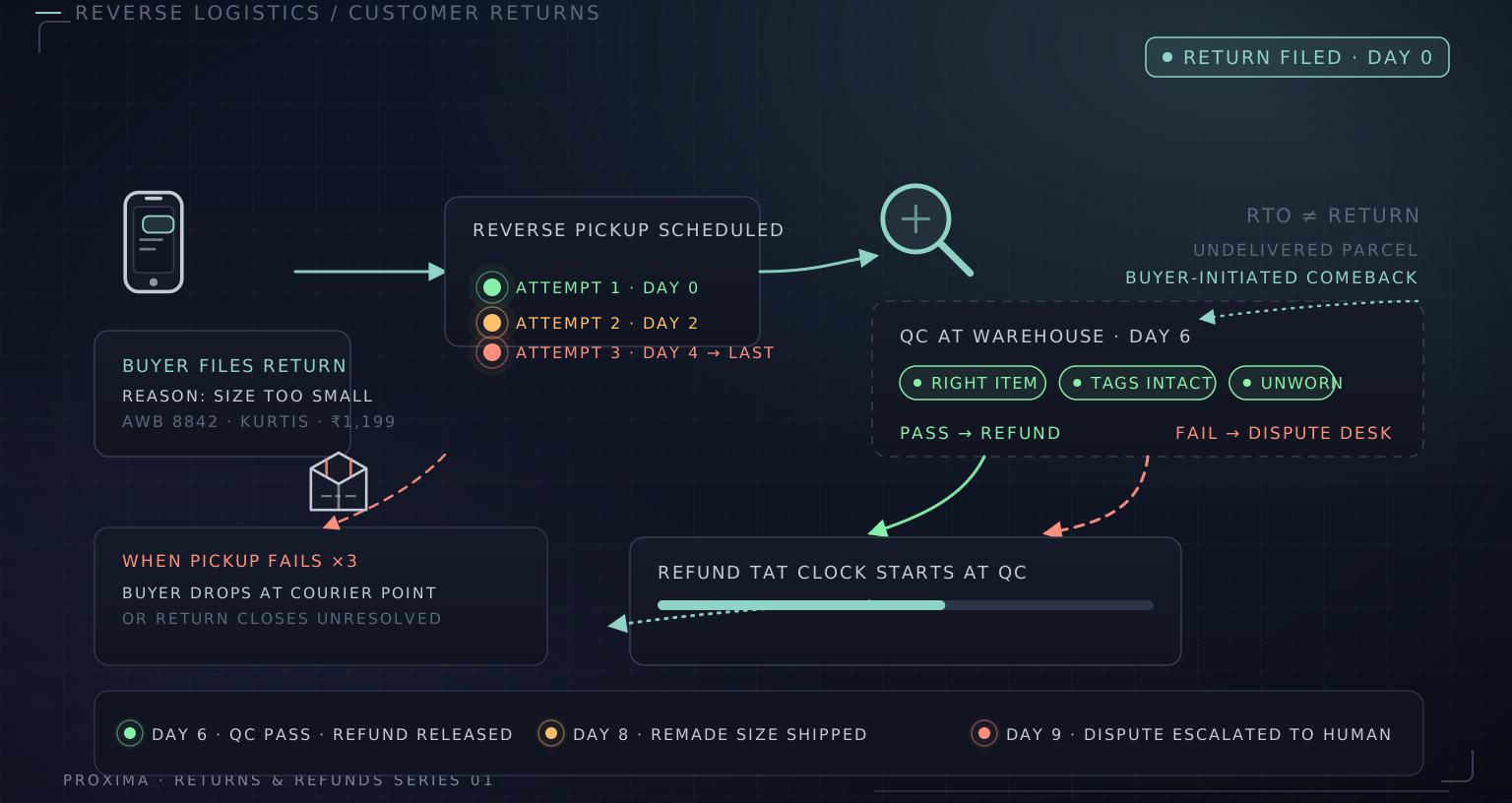
Most Indian D2C teams lump every parcel that comes back into one word: returns. But there are two different pipelines hiding in that word. One is RTO — a parcel the courier could not deliver, that nobody asked to come back. The other is a customer return: a buyer who wanted to keep the product, decided they could not, and clicked “return” themselves. Same warehouse dock. Completely different problem.
A return is a customer who is still a customer. They liked the brand enough to order. Something about the product, the size or the expectation did not work. How the next seven days go decides whether they order again — and how much of the refund, the pickup and the QC process you do by hand decides whether the return costs you ₹90 or ₹400.
Consider a mid-size brand shipping 9,000 orders a month out of one warehouse. A 10-14% return rate — normal for fashion and lifestyle categories — is roughly 1,000 returns a month. Each carries reverse pickup freight of ₹40-₹90, a QC touch, a restock or liquidation decision, and a refund the customer is watching. Handled well, most of that value comes back. Handled loosely, a third of it quietly leaves: failed pickups that burn three attempts, QC disputes that stretch to weeks, refunds promised at five days that take twelve.
The return has its own funnel
Treat a return like a funnel and measure it like one, because customers fall out of it at every stage.
- Filed. The buyer requests the return on your site, app or WhatsApp. The leak here is friction: a hidden policy, a form that errors on the order ID, a “contact us” that goes nowhere. Every abandoned return request becomes a chargeback, a social media post, or a customer who never returns.
- Pickup scheduled. The reverse pickup goes to the courier. This stage fails more than any other in India — riders deprioritise reverse shipments, buyers are not home, addresses fail a second time even though the forward delivery worked.
- Picked and received. The parcel travels back to your warehouse, which takes 3-6 days on most lanes, sometimes longer than the forward journey.
- QC pass and refund. The bench checks the item, the system releases the refund, the customer’s bank takes its own days. This is where trust is won or lost.
Most teams can state their return rate to the decimal. Almost none can state their pickup success rate on day one, or their median refund TAT from QC pass to credit. Those two numbers are where the money lives.
Reverse pickup is the first leak
Forward deliveries get the best riders, the best slots and the best attention, because that is where courier SLAs are measured. Reverse pickups get what is left. In practice, a first-attempt reverse pickup success rate of 55-70% is common. Each failed attempt costs a slot, a day, and a chunk of the customer’s patience.
Three things move the number. First, book the slot in the first message: “Thursday 11am-2pm, reply to change” beats “a rider will contact you shortly”, because vague windows mean absent buyers. Second, offer the drop-off option early, not after two failures: most courier networks have thousands of pickup points, and a buyer who works six days a week will happily walk a parcel to the shop next door. Third, watch the third attempt. After two failures, the marginal value of a third try is low and the dispute risk is high — a rule your team sets should decide, not habit.
The address deserves a mention of its own. A return pickup fails on the same bad address data that causes NDRs on the forward side — but now the customer is not waiting by the door, so the failure rate is worse. Re-verify the address inside the return confirmation message and a large share of failed reverse pickups simply never happen.
The QC bench, where disputes are born
Every returned parcel passes a quality check before the refund is released. That bench is the most underestimated part of the returns pipeline, because it is where the brand and the customer can end up on opposite sides.
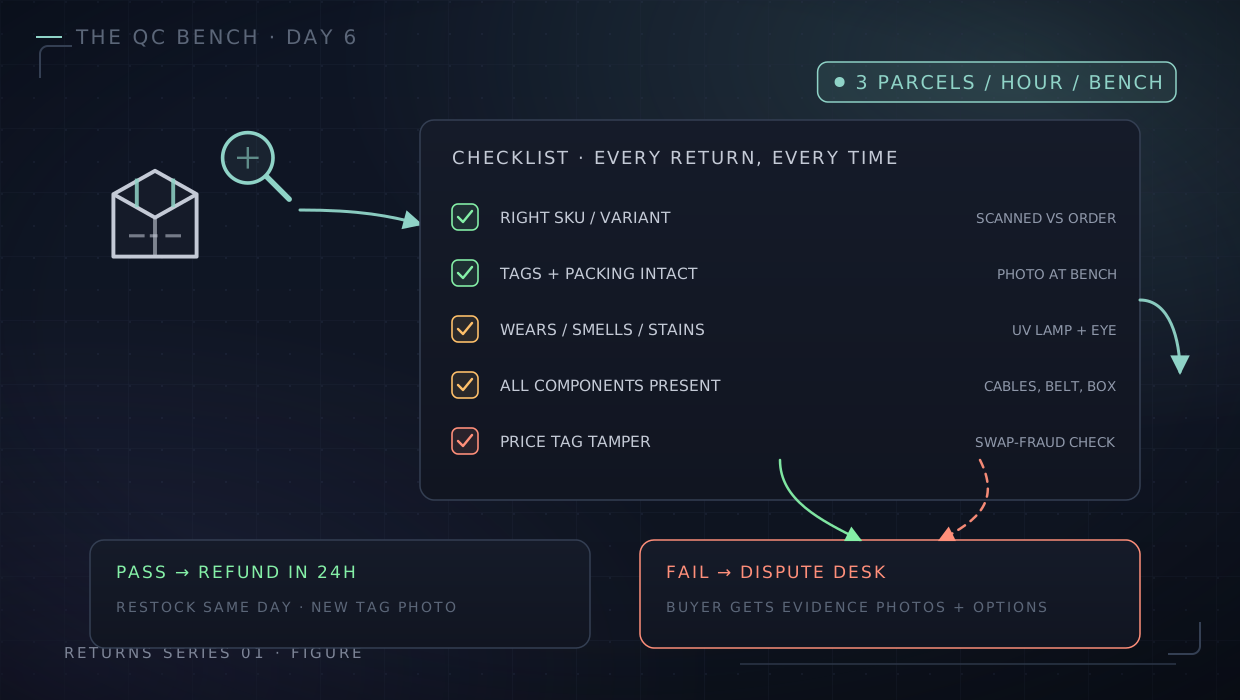
The checks are simple: right SKU, tags intact, unworn, all components present, no swap fraud. What is usually missing is evidence discipline. When the bench finds a worn kurta returned as “size too small”, what happens next? If the finding lives in a spreadsheet and the customer hears “return rejected” with no photos, you get a chargeback, a consumer forum complaint, or a one-star review — and no one can adjudicate. If the bench photographs the item at the moment of inspection, timestamps the photos, and the rejection message carries them, most disputes dissolve before they escalate. Buyers with genuine cases get clarity; the small share of professional return-fraudsters get a reason to move on.
Bench throughput matters too. During festive peaks, a QC backlog of three days quietly converts into refund TAT promises you cannot keep. Plan the bench like you plan packing stations: bodies, hours, and a target of parcels per bench per day.
Refund TAT is a promise, not a byproduct
Once QC passes, the refund has three clocks on it: your release, the gateway’s settlement cycle, and the customer’s bank. UPI refunds can land in hours. Card and netbanking refunds commonly take 3-5 working days end to end, and COD refunds to a bank account sit at the slower end because they start from a NEFT transfer, not a payment reversal.
The mistake most brands make is promising “5-7 days” and then letting the clock start at return pickup instead of QC pass — or not telling the customer anything until they ask. Then the “where is my refund” tickets start, and after the festive season they come in two to three times the usual volume. The fix is unglamorous: state the promise with a date, fire the updates at each state change (picked up, received, QC passed, refund sent), and answer the status question with the bank’s own timeline instead of “processing”. A refund that arrives on day four with no communication feels worse to a customer than one that arrives on day six with clear updates on day one, three and five.
What the return data is trying to tell you
Accumulate a quarter of return data and it stops being a cost line and starts being a product report. Return rate by SKU and variant finds the kurta that runs small, the shade that photographs differently on the PDP, the gadget with the confusing manual. Return rate by pin code, cross-referenced with confirmation data, finds zones where expectations and reality diverge — often delivery-speed related, sometimes courier related. Return reasons cluster differently for COD and prepaid buyers, which is one more argument for moving the mix toward prepaid.
None of this requires new data. It requires the return reasons, the pickup outcomes and the QC findings to sit in a queryable place instead of three inboxes and a WhatsApp group.
Where automation fits, and where people stay
Three parts of the returns pipeline are automatable without touching judgment. Status communication: the pickup scheduled / picked / received / refunded sequence is a rules-and-data problem, and most of the tickets it removes are answered before the customer asks. Scheduling: booking the slot in the first message, sending the reminder, offering the drop-off option after a failed attempt. Logging: the QC bench’s findings and photos, structured at entry instead of transcribed later.
What stays with people: the dispute call on a worn item, the decision to blacklist a serial return-fraudster, the refund exception for a VIP customer, and every policy change. The same phased sequence we recommend everywhere applies here — run the automation in shadow mode against what the team actually sends, move to approval, and only then let the routine categories run within limits your team sets. If you want the full framework, the phased trust model breaks it down.
What this does not fix
A smooth returns pipeline cannot rescue a product that should not have shipped. If a style returns at 35% because the size chart is wrong, fix the size chart — the pipeline is just an expensive way to learn the same lesson every week. And if returns cluster on one courier’s reverse lanes, that is an allocation conversation, not a process one. The pipeline’s job is narrower: make the return that had to happen cheap, fast and amicable.
Run well, customer returns are not a bleed. They are a service your competitors probably do badly, delivered to a customer who already chose you once.
Want the neighbouring problems too? We cover the parcels that never found a customer in how to reduce RTO, and the ticket storm refunds cause in automating refund status queries.